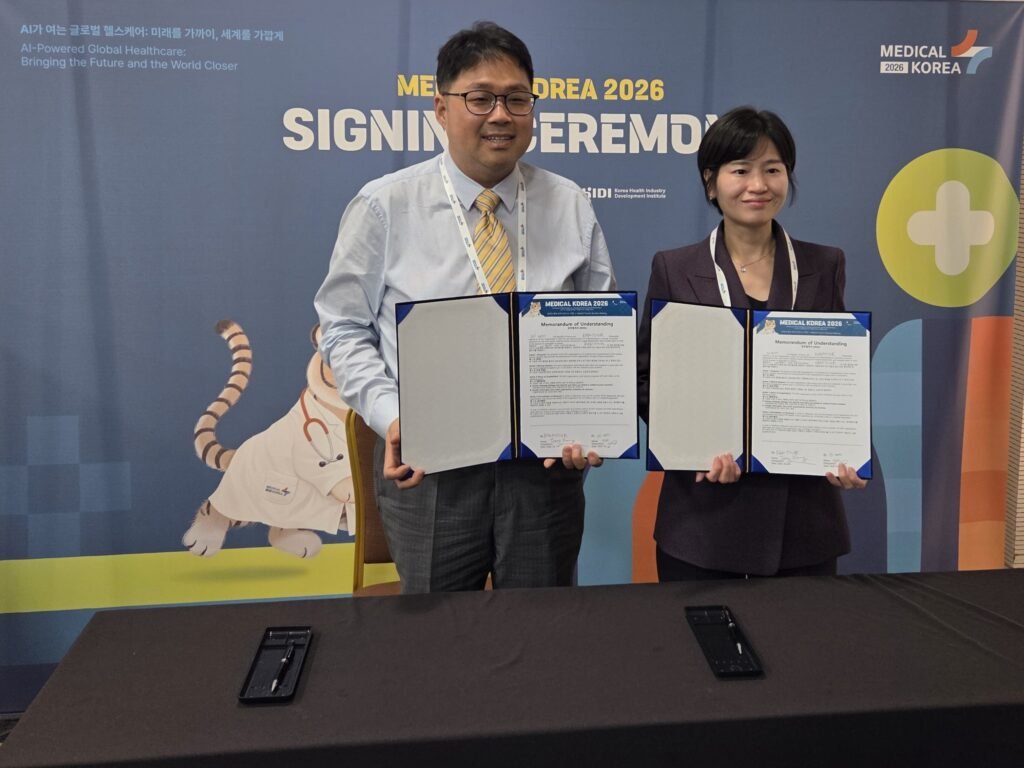
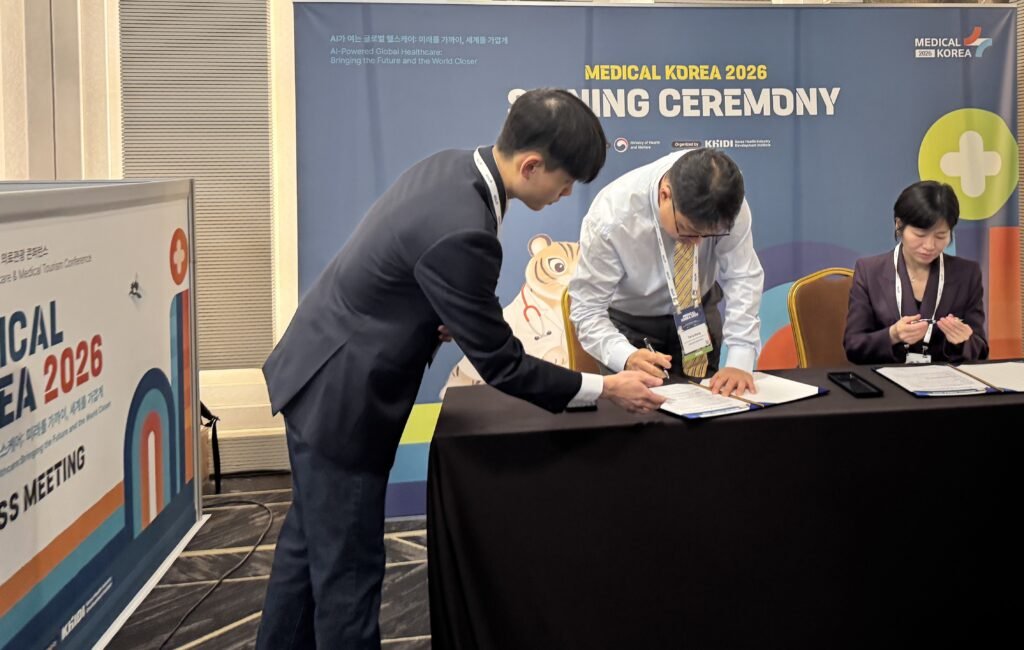
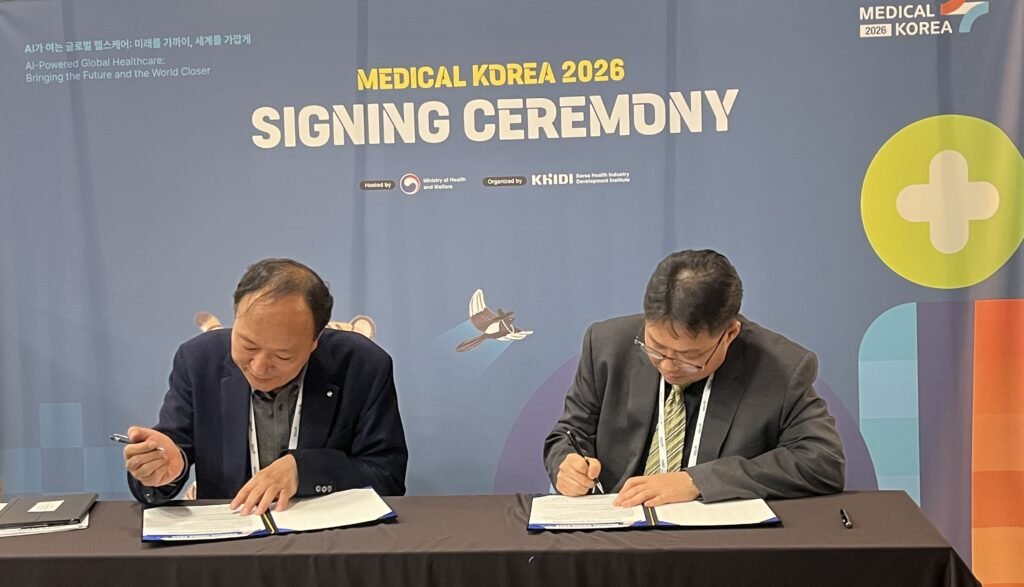
SEOUL, South Korea, March 2026 — KAMTOUR (Korea–America MedTour Association, Ltd.), a U.S.-based organization focused on advancing structured, standards-driven collaboration between Korean and American healthcare institutions, today announced the execution of multiple Memoranda of Understanding (MOUs) with leading Korean healthcare providers and healthcare companies during Medical Korea 2026, the flagship global healthcare conference hosted by the Korea Health Industry Development Institute (KHIDI) under the auspices of the Republic of Korea Ministry of Health and Welfare.
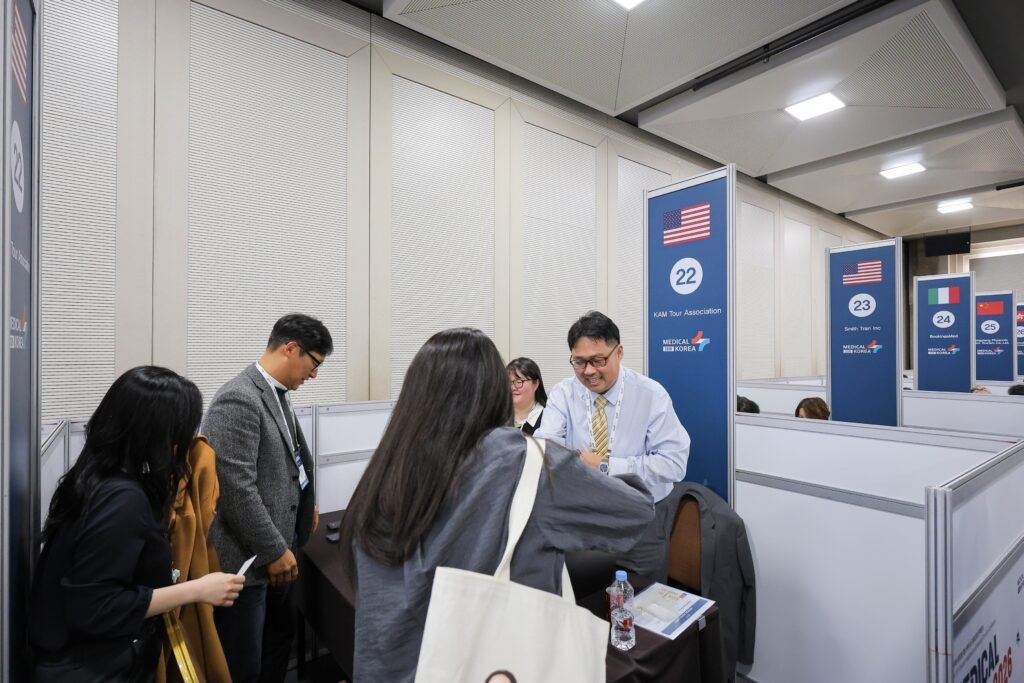
The agreements were formalized during the conference’s official Medical Tourism Business Meetings (March 19–22) and reflect continued institutional engagement between Korean healthcare organizations and U.S.-based hospitals, medical groups, and healthcare platforms.
Participating organizations include, among others, Praum Urology Clinic, Thermoceutical, Seoul NOBOS Hospital, RNWOOD Plastic Surgery, and the Seo-gu Office of Busan Metropolitan City, representing a cross-section of clinical providers, healthcare technology companies, and regional administrative stakeholders.
Establishing a Framework for Institutional Collaboration
The executed MOUs establish a coordinated framework for engagement across multiple domains, including:
●Cross-border institutional partnerships and program alignment
●International patient coordination and care pathway development
●Clinical and operational information exchange
●Joint program development and healthcare access initiatives
These agreements reflect a broader shift toward structured, institution-level collaboration in international healthcare engagement.
A representative from Praum Urology Clinic stated, “This represents an important transition toward structured, trusted collaboration with U.S. healthcare institutions, supporting long-term institutional relationships.”
A representative from Thermoceutical added, “Aligning Korean healthcare innovation with U.S. healthcare systems requires a framework that supports continuity, credibility, and scalability—elements that are increasingly expected in cross-border collaboration.”
Alignment with Evolving U.S. Healthcare Strategy
The timing of these agreements aligns with broader trends within the U.S. healthcare sector, where hospitals and academic medical centers are increasingly focused on expanding high-value service lines, optimizing case mix, and diversifying patient access channels.
Within this context, structured international engagement—supported by defined operational frameworks and institutional standards—is emerging as a strategic component of long-term program development.
Korea’s healthcare system, with its advanced clinical infrastructure and specialization across multiple disciplines, presents a complementary counterpart when engagement is supported through coordinated institutional pathways.
Public–Private Coordination and Policy Alignment
The participation of both private-sector healthcare organizations and government-affiliated entities underscores the level of coordination underpinning these developments.
Regional administrative bodies, including the Seo-gu Office of Busan Metropolitan City, participated alongside clinical providers and healthcare companies, reflecting alignment across clinical, commercial, and public-sector stakeholders.
A representative affiliated with KHIDI noted, “Initiatives of this nature reflect the continued evolution of Korea’s global healthcare engagement strategy, with increasing emphasis on structured, institution-level collaboration and sustainable international partnerships.”
Advancing a Structured U.S.–Korea Healthcare Corridor
The aggregation of multiple agreements across institutions and sectors signals continued development of a structured U.S.–Korea healthcare collaboration framework.
Within this model, institutional relationships are organized through defined coordination mechanisms that support regulatory alignment, programmatic collaboration, and structured pathways for patient mobility and clinical engagement.
As global healthcare systems increasingly prioritize cross-border collaboration, framework-based approaches are becoming an integral component of international healthcare strategy.
About KAMTOUR
KAMTOUR (Korea–America MedTour Association, Ltd.) is a U.S.-based organization dedicated to advancing structured, standards-driven collaboration between Korean and American healthcare institutions. Through its KAMTOUR Verified™ platform and broader institutional initiatives, KAMTOUR supports transparency, institutional alignment, and long-term engagement across international healthcare partnerships.
Media Contact
KAMTOUR (Korea–America MedTour Association, Ltd.)Email: media@kamtour.orgWebsite: https://kamtour.org/
For more information, please visit:
2026 Medical Korea: https://www.mkconf.org/fairDash.do
Korea Health Industry Development Institute, Republic of Korea Ministry of Health: https://www.khidi.or.kr/eps
Seo-gu Office of Busan Metropolitan City: https://www.busan.go.kr/eng/index
Thermoceutical: https://illglobal.com/
Seoul Nous Hospital: http://novos.kr/
RNWOOD Seoul: https://rnwoodseoul.com/
Praum Urology Clinic: https://www.praumurology.com/

