
Medical tourism is growing rapidly as patients seek better healthcare abroad. Foreign patients want advanced medical treatments combined with safe travel experiences.
South Korea has emerged as a global leader in medical tourism. Millions of medical tourists now visit Seoul, Busan, and Incheon each year.
South Korea’s medical tourism industry attracts patients from western countries and Asia. They come for advanced medical care, cutting-edge hospitals, and world-class doctors.
Seoul is the center for medical travel, combining treatment with cultural attractions. Incheon International Airport makes medical visits easy and well-connected for travelers.
The Korean government actively promotes Korea for medical tourism opportunities. It highlights international patient services, advanced technologies, and accredited medical institutions.
Medical Korea, the official brand, markets the country as a medical tourism destination. This program ensures foreign patients know Korea offers safe and reliable healthcare.
Let’s explain why South Korea is a top medical tourism destination. We will cover government policies, advanced hospitals, popular specialties, and recovery options.
Evolution of Medical Tourism in South Korea
South Korea’s reputation in medical tourism began with cosmetic and dermatology services. Seoul quickly became known as the plastic surgery capital of the world.
Foreign patients came for cosmetic surgery, skin treatments, and beauty-related procedures. This positioned Korea as a cosmetic hub, but the industry soon expanded.
By the 2000s, Korea’s healthcare system started attracting medical travelers more broadly. Hospitals began offering medical treatments in orthopedics, oncology, and cardiology.
Korean medical institutions invested in advanced medical technologies like MRI and robotics.
The Korean government launched programs to regulate and grow medical tourism safely.
Growth Statistics
- In 2009, Korea passed a law to attract medical tourists.
- By 2019, over 2.5 million foreign patients had received treatment in Korea.
- International patients mainly came from the United States, Russia, and China.
- Korea’s medical tourism business generated billions annually for the national economy.
Comparison Table: Korea vs Western Countries
| Factor | South Korea | Western Countries |
| Cost Transparency | Package-based, clear pricing | Higher, often less transparent |
| Wait Times | Short, quick scheduling | Often long for major procedures |
| Technology Access | Cutting-edge, AI and robotics | Varies by country |
| Tourism Value | Integrated with recovery tourism | Often separate from treatment |
Today, medical tourism in South Korea is no longer cosmetic-focused. It includes cancer treatment, spinal surgery, fertility services, and organ transplants. This evolution proves Korea is a global leader in advanced medical tourism.
Government Support and Regulation
Government involvement is central to South Korea’s medical tourism industry success. The Ministry of Health and Welfare oversees the entire healthcare system.
It ensures hospitals and clinics maintain strict safety and accreditation standards. Government programs support both Korean medical institutions and foreign patients directly.
Government Initiatives Supporting Medical Tourists
- Accreditation Program for Hospitals Serving Foreign Patients (KAHF): Ensures safety.
- Medical Korea brand: Promotes Korea as a destination for medical travel globally.
- Visa programs: Streamline entry for medical tourists seeking advanced medical treatments.
- Legal protections: Safeguard against malpractice and medical disputes in Korean hospitals.
- Tourism support: Korea Tourism Organization integrates medical tours with cultural packages.
These programs make Korea a reliable destination for international patients worldwide. They also demonstrate the Korean government’s commitment to attracting medical tourists.
Table: Key Government Bodies and Roles
| Institution | Role in Medical Tourism |
| Ministry of Health and Welfare | Oversees hospitals, quality, and patient safety |
| KHIDI (Medical Korea) | Promotes Korean healthcare globally |
| Korea Tourism Organization | Designs cultural and medical travel programs |
| Immigration Services | Provides medical travel visas for foreign patients |
Through regulation, the government ensures Korea offers safe, cutting-edge healthcare services. This strengthens South Korea’s position as a global leader in medical tourism.
Cutting-Edge Medical Technologies
Advanced medical technologies are a major strength of Korea’s healthcare system. Korean hospitals consistently invest in equipment and training for international patients.
Medical tourists come for cutting-edge diagnostics, robotic surgery, and AI-powered care. South Korea has received global recognition for innovations in medical technologies.
Technologies Used in Korean Hospitals
- MRI and CT scans: Detect diseases early and guide treatment planning.
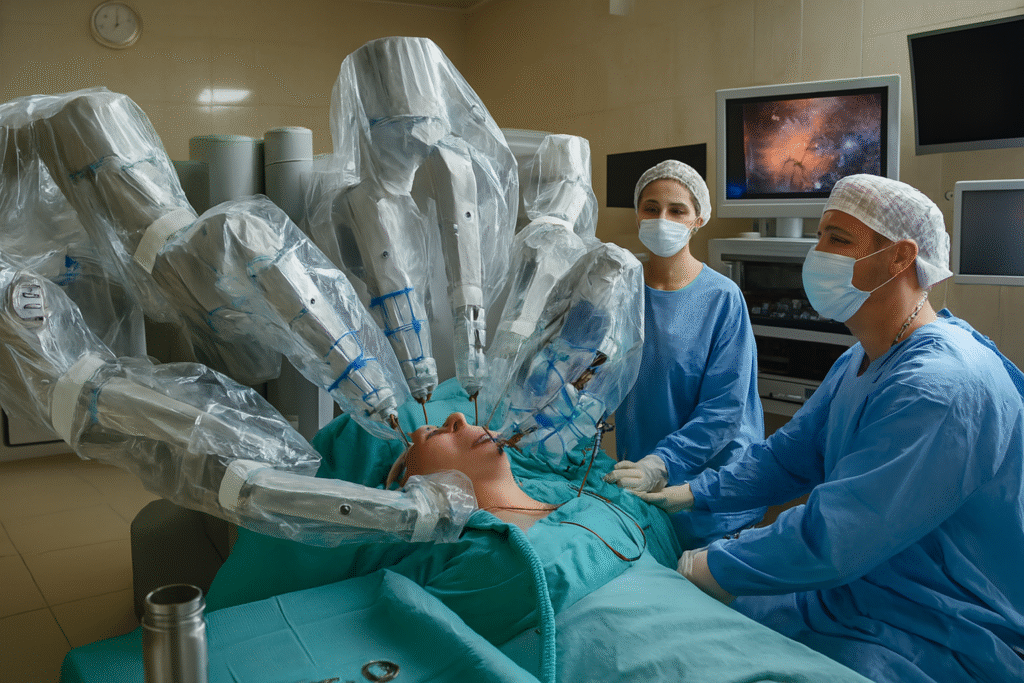
- Robotic surgery: Provides minimally invasive operations with faster recovery times.
- AI diagnostics: Supports doctors in cancer detection and treatment decisions.
- 3D imaging: Helps in cosmetic and orthopedic planning for foreign patients.
- Stem cell therapy research: Offers regenerative options for advanced medical care.
Example: Robotic Surgery in Seoul
Hospitals in Seoul use robotic surgery for orthopedics, oncology, and cardiovascular care. Foreign patients prefer these procedures because they minimize scars and recovery times. This makes Korea a top medical tourism destination for advanced procedures.
Table: Benefits of Advanced Technology in Korea
| Technology | Benefit for Medical Travelers |
| MRI and CT | Fast, accurate detection of health issues |
| Robotic Surgery | Minimally invasive, faster recovery times |
| AI-based Diagnostics | More precise results for complex conditions |
| Stem Cell Therapy | Future-focused advanced medical treatments |
Korean hospitals provide world-class medical technologies that rival western countries. This attracts international patients seeking advanced care in a safe destination.
Popular Specialties for International Patients
Foreign patients choose Korea for specialties beyond cosmetic and dermatology care. Medical travelers come for cancer, spinal, cardiac, and organ transplant treatments. South Korea’s world-class medical institutions provide advanced care in many fields.
Cancer Treatment
Korea offers targeted therapies, radiation oncology, and robotic cancer surgeries. International patients trust Korean hospitals for their survival rates and advanced technology.
Orthopedic and Spinal Surgery
Orthopedic surgery is highly popular among medical tourists in South Korea. Korea offers minimally invasive spinal procedures and advanced joint replacements. Rehabilitation centers in Seoul and Busan help recovery after orthopedic surgery.
Ophthalmology and Vision Correction
Korea is a leader in LASIK, SMILE, and cataract surgeries. International patients choose Korean ophthalmology for safe and precise results.
Organ Transplants
Korean hospitals specialize in liver, kidney, and lung transplant services. Foreign patients are drawn by world-class survival outcomes and infection control.
Fertility Treatments
Fertility centers in Seoul provide IVF and reproductive health services. Couples travel from western countries seeking advanced medical fertility care.
Table: Popular Specialties for International Patients
| Specialty | Why International Patients Choose Korea |
| Cancer | Targeted therapy, robotic oncology, high survival |
| Orthopedics | Minimally invasive, spinal surgery, joint recovery |
| Ophthalmology | LASIK, SMILE, advanced eye care |
| Organ Transplant | Survival outcomes, strict infection control |
| Fertility | IVF success rates, advanced reproductive medicine |
Korea’s specialties show why it is a global leader in medical tourism.
Accreditation and Quality Standards
Foreign patients want assurance of safety when choosing medical tourism destinations. South Korea provides world-class accreditation and strict healthcare quality standards.
Accreditation Programs
- KAHF: Ensures hospitals meet foreign patient safety standards.
- Joint Commission International (JCI): Global recognition for Korean hospitals.
- ISO certifications: Applied in infection control and quality management systems.
Table: Accreditation in Korea
| Accreditation | What It Guarantees for Foreign Patients |
| KAHF | Korean government recognition for foreign care |
| JCI | International trust and safety recognition |
| ISO Standards | Consistent infection control and safety measures |
Accreditation ensures Korean hospitals maintain world-class medical services for medical tourists. It also provides confidence to foreign patients seeking treatment in Korea.
Services for International Patients
Korean medical institutions design services specifically for international patients. Hospitals provide multilingual staff, travel support, and personalized medical coordinators.
Services Provided
- Language interpreters for English, Chinese, and Japanese patients.
- Visa assistance for medical travelers entering through Incheon International Airport.
- Partnerships with hotels for smooth stay in Korea during recovery.
- Shuttle services and airport pickups for foreign patients visiting Korean hospitals.
- Dedicated care teams guiding medical consultations and recovery planning.
Table: Support for Foreign Patients
| Service | How Korea Supports International Patients |
| Language | Multilingual staff and interpreters in hospitals |
| Travel Assistance | Visa help, Incheon transfers, hotel partnerships |
| Recovery Care | Coordinated services for faster patient recovery |
| Legal Protection | Mediation for disputes and malpractice concerns |
These services make Korea for medical visits more convenient and stress-free.

Recovery and Tourism in Korea
Recovery is a major part of the medical tourism experience. South Korea combines healthcare services with cultural tourism for medical travelers.
Recovery Programs
- Rehabilitation centers for orthopedic and spinal surgery patients.
- Traditional Korean medicine therapies blended with modern recovery approaches.
- Wellness retreats on Jeju Island for relaxation and healing.
Tourism Opportunities
- Explore Seoul’s shopping, culture, and history during medical recovery.
- Visit Busan for beachside relaxation after advanced medical treatments.
- Experience Korean food, K-pop, and cultural attractions while recovering.
This mix of medical recovery and cultural exploration makes Korea unique. It helps position South Korea as a world-class medical tourism destination.
Economic and Cultural Strengths
South Korea’s strong economy supports investment in world-class medical facilities. The welfare of South Korea focuses on healthcare services and patient safety.
Cultural appeal adds value to Korea’s medical tourism industry. Foreign patients enjoy Korean food, lifestyle, and entertainment while recovering.
The Korea Tourism Organization promotes medical packages linked with sightseeing tours. It strengthens South Korea’s position as a global leader in medical travel.
Challenges in Korean Medical Tourism
Despite strengths, challenges remain for medical tourism in South Korea.
Key Issues
- Language barriers affect patients who cannot speak Korean fluently.
- Some worry about medical malpractice, though protections exist.
- Cost transparency compared to western countries may confuse foreign patients.
- Patients must carefully select accredited Korean hospitals for safe treatment.
The Korean government continues to improve services to address these challenges. Its efforts ensure medical tourism in Korea remains safe and reliable globally.

Future of Medical Tourism in Korea
The future of Korean medical tourism looks advanced and innovative. Hospitals are expanding services beyond cosmetic surgery and dermatology treatments.
Emerging Trends
- Stem cell therapy: Expanding regenerative medicine treatments for international patients.
- AI-driven healthcare: Personalized medical consultations using advanced algorithms.
- Precision medicine: Customized cancer treatment based on genetic profiling.
- Digital health platforms: Telemedicine services for patients before and after visits.
South Korea’s future in medical tourism will focus on cutting-edge technologies. It will strengthen its role as a global leader in advanced healthcare.
Conclusion
South Korea is now one of the world’s top medical tourism destinations. It offers world-class medical treatments, cultural recovery, and strong government support.
Seoul, Incheon, and Busan are major hubs for medical tourists globally. Foreign patients trust Korean medical institutions for cancer, orthopedic, and transplant care.
International patient services ensure safety, comfort, and easy travel during medical visits. Korea offers far more than cosmetic surgery; it delivers advanced medical solutions.
Medical travelers are drawn by Korea’s balance of care and vacation. Korea offers unique treatment packages that combine hospitals, hotels, and wellness tours.
Medical travel here is both practical and enjoyable. For patients seeking a reliable destination for medical travel and recovery, South Korea remains a global leader in medical tourism today.

