
South Korea has become one of the world’s most respected destinations for medical and aesthetic treatment. Every year, thousands of international patients arrive in Seoul, Incheon, and Busan to receive care at world-class hospitals and clinics.
Many come seeking cosmetic surgery, while others travel for advanced orthopedic, spinal, and cancer treatments. The country’s reputation rests on its highly skilled medical professionals, strong accreditation standards, and state-of-the-art medical facilities.
Supported by the Ministry of Health and Welfare, the Korean healthcare industry offers a safe, efficient, and welcoming environment for medical tourists. Medical tourism in South Korea has grown steadily since the early 2010s.
Despite the global disruption of the COVID-19 pandemic, the nation’s robust public health and disease control measures kept its healthcare system strong. Now, with borders fully open, patients are returning for care that combines precision medicine and Korean hospitality.
Let’s walk you through every step: from pre-travel planning and hospital selection to recovery and returning home. By the end, you’ll understand what to expect when traveling to South Korea for medical treatment, and how to make your experience safe, comfortable, and rewarding.

Why South Korea Leads in Global Medical Tourism
South Korea’s healthcare system consistently ranks among the best worldwide. The Korean government maintains a universal health insurance system to ensure high-quality care for locals and international patients.
This foundation supports the growth of Korean medical tourism; a sector recognized globally for both medical excellence and cultural experience. Several factors make Korea’s medical services exceptional:
● Advanced technology: Robotic surgery, AI-assisted diagnostics, and precision imaging.
● Expertise: Many doctors trained in the U.S. or Western countries.
● Accreditation: Hospitals accredited by the Joint Commission International (JCI).
● Efficiency: Short waiting times and well-organized appointment systems.
● Patient-centered culture: Focused on personalized consultation and recovery care.
| Category | Korea | Western Countries |
| Surgery Wait Time | 1 to 3 weeks | 2 to 8 weeks |
| Technology Integration | State-of-the-art | Varies |
| Price (Cosmetic Surgery) | 30 to 50% lower | Higher |
| English-speaking Staff | Widely available | Standard |
| Accreditation | JCI, KHIDI | National |
Seoul is home to over 20 large university hospitals, including Seoul National University Hospital, Samsung Medical Center, and Asan Medical Center. These facilities provide everything from cosmetic surgery and dental care to cancer treatment and orthopedic procedures.
The Ministry of Health and Welfare and the Korea Health Industry Development Institute (KHIDI) oversee the medical tourism industry. Their “Medical Korea” initiative connects foreign patients with licensed medical institutions and verified medical tourism agencies.
Popular Treatments for International Patients
Korean medical tourism covers both medical and aesthetic procedures. Each year, foreign patients visit for specialized treatments that combine advanced science with artistic precision.
1. Aesthetic and Cosmetic Treatments
Seoul’s Gangnam District is often called the “plastic surgery capital of the world.” Procedures include:
● Rhinoplasty (nose reshaping)
● Double eyelid surgery
● Jaw and facial contouring
● Liposuction and body sculpting
● Hair transplantation
Korean cosmetic surgery emphasizes natural results and minimal downtime. Many hospitals offer pre-procedure consultation, 3D imaging previews, and post-procedure recovery plans in English.
2. Dermatology and Skin Care
● Laser therapy for pigmentation and scars.
● Acne treatment and anti-aging facials.
● Korean dermatology clinics integrate advanced medical-grade cosmetics and LED therapy.
3. Medical Treatments
● Orthopedic and spinal surgeries: popular among international patients for their precision.
● Cancer treatments: Korea’s medical institutions use up-to-date radiation and targeted therapies.
● Cardiovascular procedures: world-class outcomes and lower costs.
● Fertility and IVF programs: high success rates compared to Western countries.
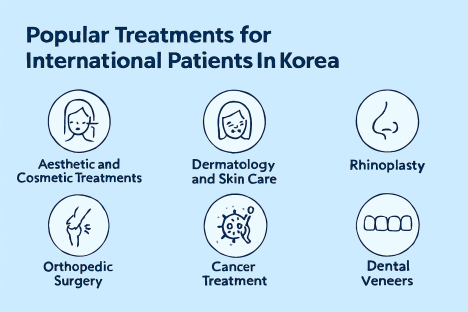
| Procedure | Average Stay | Estimated Cost (USD) |
| Rhinoplasty | 7 to 10 days | 4,000 to 6,000 |
| Orthopedic Surgery | 10 to 14 days | 8,000 to 12,000 |
| Cancer Treatment | 2 to 4 weeks | 15,000 to 25,000 |
| Dental Veneers | 3 to 5 days | 2,000 to 4,000 |
| Dermatology Laser | 1 to 2 days | 500 to 800 |
Planning Your Medical Trip
Planning your trip to Korea for medical treatment begins with selecting a reputable hospital or clinic. The Medical Korea portal lists accredited providers recognized by KHIDI and JCI.
Step-by-Step Planning
1. Research hospitals and clinics via official portals.
2. Consult online with a Korean doctor or coordinator.
3. Confirm your diagnosis and cost estimate.
4. Apply for a medical visa (C-3-3) through a Korean embassy or consulate. 5. Book accommodation near the treatment center.
6. Purchase travel insurance covering medical evacuation and emergency care. 7. Finalize your itinerary and arrange airport transfers.
Medical tourism agencies can handle these logistics. They help with translation, transportation services, and even tourism options during recovery.
Tip: Always check hospital accreditation before booking. Facilities accredited by KHIDI or the Joint Commission International meet global healthcare standards.
Arrival in Korea
Upon arrival at Incheon International Airport, visitors find designated medical tourism desks providing support in multiple languages.
Transportation and Accommodation
● Many hospitals offer airport pickup and hotel booking.
● Major medical districts in Seoul like Gangnam and Sinchon have hotels designed for medical tourists.
● Recovery-friendly accommodations often include meals, nurse visits, and interpreter services.
Orientation and Registration
At the hospital, patients undergo registration and consultation. English-speaking staff explain each medical procedure, costs, and post-procedure care. All medical appointments are punctual and organized.
| Service | Included For Medical Tourists |
| Airport Transfer | Yes |
| Translation Support | English, Arabic, Chinese |
| Consultation Booking | Pre-arranged |
| Emergency Medical Hotline | 24/7 |
| Hospital Wi-Fi | Free |
During Your Treatment
South Korea’s medical professionals emphasize safety, efficiency, and patient trust. Every medical institution follows strict hygiene standards supervised by the Korean Ministry of Health and Welfare.
Consultation and Procedure
● Doctors provide detailed explanations before every medical procedure.
● Pre-surgery testing ensures suitability.
● Patients sign legal consent forms explaining side effects and recovery expectations.
Korean medical facilities use state-of-the-art imaging systems, robotic surgical units, and AI diagnostics. For example, Samsung Hospital and Asan Medical Center employ up-to-date robotic platforms for spinal and orthopedic surgery.
Communication
If you face a language barrier, hospitals provide English-speaking coordinators. They accompany patients during consultations, pharmacy visits, and insurance claims.
Pharmacies in Seoul are modern, with prescription drugs dispensed under the Ministry of Food and Drug Safety regulations.
Recovery and Aftercare
After surgery or medical treatment, patients are moved to recovery wards or nearby care facilities. Korean hospitals prioritize comprehensive care and follow-up monitoring.
Post-Procedure Care
● Daily nurse visits and wound inspection.
● Prescribed medication and pain management.
● Nutritional support through Korean cuisine tailored to recovery needs.
● Optional acupuncture or oriental medicine therapy for faster healing.
Post-procedure recovery may take from several days to weeks depending on the treatment.
Wellness Integration
Patients often join wellness programs that blend recovery with relaxation; such as Hanok-style spas, herbal treatments, and skincare sessions.
Seoul’s Gangnam area offers dedicated recovery centers with private rooms, translators, and guided city tours for light tourism.
Exploring Korea During Recovery
While recovering, many patients enjoy gentle sightseeing. Seoul, Incheon, and Jeju Island offer comfortable and accessible travel experiences.
● Visit traditional markets for Korean cuisine.
● Experience cultural sites like Gyeongbokgung Palace or Bukchon Hanok Village.
● Try mild walking tours designed for medical tourists.
● Use transportation services like medical taxis equipped for patient comfort.
| Recovery-Friendly Activities | Location | Recommended for |
| Korean Spa and Sauna | Seoul | Post-surgery relaxation |
| Jeju Healing Resort | Jeju Island | Cancer and rehab patients |
| Hanok Stay | Bukchon | Light recovery |
| Gangnam Café Tour | Seoul | Aesthetic tourists |
Costs, Payment, and Insurance
South Korea’s healthcare remains cost-effective compared to Western countries. Medical tourists can expect transparent pricing and competitive package deals.
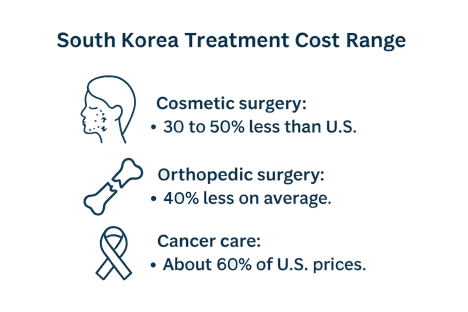
Cost Range
● Cosmetic surgery: 30 to 50% less than U.S.
● Orthopedic surgery: 40% less on average.
● Cancer care: About 60% of U.S. prices.
Insurance and Payment
● Most hospitals accept credit cards and international transfers.
● Travel insurance covering medical evacuation is highly recommended. For emergencies, the Department of State advises checking the legal status of local care providers.
Refunds and Billing
Patients receive itemized bills with details of medical services, prescription drugs, and accommodation.
Language, Culture, and Communication
South Koreans are warm, respectful, and professional. Understanding basic Korean customs helps international patients adjust comfortably.
Language
Most hospitals and clinics provide multilingual coordinators. Signs and instructions are available in English.
Cultural Etiquette
● Be polite and punctual for all medical appointments.
● Remove shoes inside certain medical facilities.
● Address doctors formally (“Doctor Kim” or “Professor Park”).
Cuisine and Lifestyle
Korean food supports recovery. Light soups, rice dishes, and teas are often recommended post-treatment.
| Korean Recovery Foods | Purpose |
| Ginseng Chicken Soup | Immunity |
| Seaweed Soup | Healing |
| Herbal Tea | Relaxation |
Returning Home and Follow-Up Care
After discharge, you’ll receive a medical report and prescription list. Most hospitals provide an English translation for your home doctor.
Telemedicine and Virtual Follow-Up
Many hospitals now offer online consultations for follow-up care. This ensures you stay in touch with your Korean doctor even after returning home.
If you need prescription refills, the hospital can send documentation for your local pharmacy. Always verify local regulations through your embassy or consulate.
Medical Evacuation
In emergencies, medical evacuation services can coordinate with international healthcare networks for transfer to your home country.
Frequently Asked Questions
Is it safe to travel for medical care in Korea?
Yes. Korean hospitals follow global safety protocols and are accredited by the Joint Commission International.
How long should I stay after treatment?
Most aesthetic procedures need 5 to 10 days; major surgeries require 2 to 4 weeks.
Can I use my insurance?
Some U.S. insurers cover treatments abroad. Check policy details before traveling.
Do I need vaccinations?
Routine vaccine updates (hepatitis, flu, COVID-19) are recommended before entry.
What about the language barrier?
Most medical institutions offer English-speaking coordinators and interpreters.
How do I verify accreditation?
Use official Medical Korea and KHIDI websites for hospital verification.
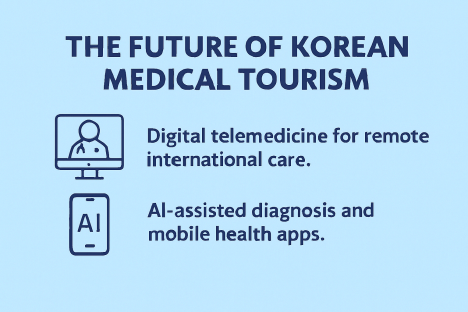
The Future of Korean Medical Tourism
The Korean medical tourism industry continues to expand rapidly. The Ministry of Health and Welfare promotes new initiatives focusing on innovation, patient safety, and international cooperation.
Future growth areas include:
● Digital telemedicine for remote international care.
● AI-assisted diagnosis and mobile health apps.
● Partnerships between Korean medical institutions and Western countries.
● Enhanced accommodation and transportation services for medical travelers.
South Korea’s healthcare remains a model of quality, compassion, and innovation. With continued investment in medical technology, education, and global partnerships, Korea offers one of the most reliable healthcare experiences worldwide.
Conclusion
Traveling to South Korea for medical or aesthetic treatment is more than a trip; it’s an experience in trust, precision, and care. The country combines Korean medical expertise, advanced technology, and hospitality to create an environment ideal for healing.
From visa applications and consultations to post-procedure recovery, everything in Korea’s system is built to support the international patient.
Whether you come for plastic surgery, dental care, or a comprehensive medical checkup, you can expect safety, professionalism, and compassion every step of the way.
As medical tourism in South Korea continues to grow, it sets the global benchmark for excellence. And showing how the fusion of science, hospitality, and culture can redefine healthcare for travelers worldwide.

