
The relationship between the United States and South Korea is entering a new phase. It’s not about trade or defense this time. It’s about healthcare and how both nations are reshaping the way medical systems work across borders.
As the global healthcare industry evolves, the need for cross-border cooperation has become critical. Korea has built one of the most efficient healthcare systems in the world, while the U.S. continues to lead in pharmaceutical innovation, research, and medical education.
Together, these two powers are aligning strengths to redefine what cross-border healthcare means. From telemedicine and joint research programs to patient care and medical tourism, this collaboration is bridging continents, and healthcare closer to everyone, everywhere.

The Rise of Korea’s Global Healthcare Presence
In just two decades, South Korea’s healthcare system has become a global benchmark. Managed under the Ministry of Health and Welfare (MOHW), it blends universal health coverage, advanced medical technology, and a patient-centered philosophy.
The National Health Insurance program, introduced in 1989, made healthcare accessible to nearly all Koreans. Today, it covers more than 97% of the population. This universal healthcare model keeps insurance costs manageable while maintaining high-quality care.
Korea’s Strengths in Global Health
● Universal coverage: Accessible and affordable healthcare for all citizens.
● Advanced medical technology: South Korea is a global leader in robotic surgery, AI-assisted diagnostics, and digital health platforms.
● Comprehensive care: Korean hospitals offer integrated care services, from preventive health checks to long-term care for the aging population.
● Global partnerships: Collaboration with foreign medical institutions, including many in the U.S., supports medical research and cross-border healthcare innovation.
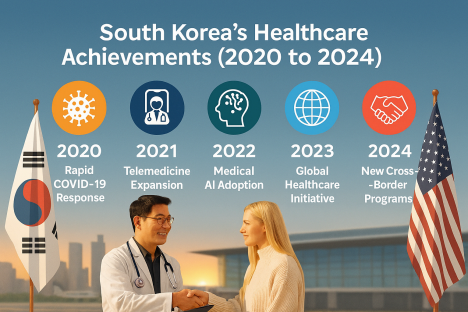
Table: South Korea’s Healthcare Achievements (2020 to 2024)
| Year | Key Milestone | Impact |
| 2020 | Rapid COVID-19 Response | Strengthened global confidence in Korea’s public health model |
| 2021 | Telemedicine Expansion | Introduced virtual consultations for foreign and domestic patients |
| 2022 | Medical AI Adoption | Implemented diagnostic AI tools in major hospitals |
| 2023 | Global Healthcare Initiative | Expanded KHIDI’s outreach to U.S. and Middle East |
2024 New Cross-Border Programs
Launched joint research with U.S. medical centers
Understanding Cross-Border Healthcare
Cross-border healthcare refers to patients seeking medical treatment outside their home country or collaboration among health systems across borders.
For Korea and the United States, this concept has evolved beyond patient travel; it’s about shared expertise, joint research, and digital integration.
Why Cross-Border Healthcare Matters
● Addresses global health issues like pandemics, chronic disease, and mental health.
● Reduces healthcare costs by sharing infrastructure and medical resources.
● Enhances medical tourism through international accreditation and standardized care protocols.
● Promotes global health security through data exchange and early warning systems.
Both countries recognize healthcare cooperation as a strategic asset. The Minister of Health and Welfare in Seoul emphasized in 2024 that “Korea’s healthcare innovation is not just for Koreans; it’s for the world.”

Korea’s Medical Infrastructure and the U.S. Connection
Korea’s medical infrastructure rivals that of top global systems. The Seoul National University Hospital (SNUH), Asan Medical Center, and Samsung Medical Center consistently rank among the world’s best medical institutions.
These hospitals combine cutting-edge medical technology, patient-centered design, and international accessibility. Many offer multilingual services for foreign patients; especially English, Arabic, Chinese, and Russian.
U.S. Korea Institutional Partnerships
● SNUH collaborates with the U.S. National Institutes of Health (NIH) on infectious disease research.
● Asan Medical Center partners with Mayo Clinic for oncology studies.
● KHIDI (Korea Health Industry Development Institute) supports Korean hospitals in building branches or representative offices across the U.S..
● Johns Hopkins Medicine and Seoul St. Mary’s Hospital co-develop programs in telemedicine and digital healthcare.
This network creates a foundation for cross-border healthcare cooperation, enabling smoother patient referrals, joint training, and medical aid initiatives during emergencies.
The Role of the Korea Health Industry Development Institute (KHIDI)
At the heart of Korea’s global health strategy lies KHIDI, short for Korea Health Industry Development Institute.
Established under the Korean government’s Ministry of Health and Welfare, KHIDI acts as the bridge between Korean medical services and the global healthcare industry.

KHIDI’s Core Missions
1. Promote Korean healthcare and medical tourism internationally.
2. Support overseas expansion of Korean hospitals and healthcare technology companies. 3. Develop evaluation systems to ensure high-quality medical services.
4. Facilitate cooperation with the U.S., UAE, and other global partners.
5. Provide consultation and information to foreign patients seeking treatment in Korea.
Global Reach
KHIDI maintains international offices in Washington D.C., Dubai, and Incheon, connecting foreign patients with trusted Korean hospitals. In 2023, KHIDI helped over 450,000 international patients access Korean healthcare safely and efficiently.
Medical Tourism and International Patients
Medical tourism remains one of the strongest pillars of Korea’s healthcare industry. Seoul, Busan, and Incheon host hundreds of medical centers dedicated to international healthcare.
Popular Treatments for Foreign Patients
| Category | Common Procedures | Why U.S. Patients Choose Korea |
| Cosmetic | Plastic surgery, dermatology, dental aesthetics | Affordable, world-class outcomes |
| Specialized | Cardiovascular, oncology, neurology | Advanced diagnostics and treatment |
| Preventive | Health screening, genetic testing | Comprehensive and technology-driven |
| Traditional | Korean medicine, oriental medicine | Integrative and holistic healing options |
Visa and Accessibility
The Korean government introduced the Medical Visa (C-3-3) for foreign patients, allowing extended stays for treatment and recovery.
Incheon International Airport has a medical consultation desk, guiding patients directly to partner hospitals in Seoul and nearby regions.
South Korea’s Healthcare Technology and Innovation
South Korea’s medical technology is among the most advanced globally. The country invests heavily in AI-based imaging, robotic surgery, and telemedicine.
During the COVID-19 pandemic, Korea became a global leader in public health technology and testing infrastructure.
Innovation Highlights
● AI Diagnostics: Korean startups partner with U.S. universities for algorithm-based disease detection.
● Telemedicine Platforms: Allow real-time cross-border health consultations between Seoul and New York.
● Digital Hospitals: Fully paperless environments, integrating electronic records and predictive analytics.
● Medical Devices: Korean firms produce cutting-edge cardiovascular and imaging equipment.
The Ministry of Health and Welfare continues to push for global healthcare innovation, aligning with U.S. health policy priorities in data-driven medicine and pandemic response.

Cross-Border Policy and Health Cooperation
Policy collaboration is the backbone of sustainable cross-border healthcare. The Korean government and the U.S. Department of Health and Human Services (HHS) have signed multiple Memoranda of Understanding (MOUs) since 2021.
Key Policy Areas
● Health data sharing to monitor global health issues.
● Joint research funding for infectious disease prevention.
● Training programs for Korean medical professionals in U.S. institutions.
● Public health cooperation for pandemic preparedness and aging care services.
Both governments view universal coverage and health equity as shared goals. The Korean model offers valuable insights into national health insurance systems, while the U.S. provides expertise in innovation, pharmaceutical development, and care management.
Telemedicine and Digital Cross-Border Care
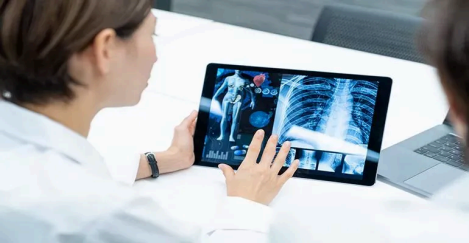
The future of cross-border health lies in digital healthcare. Korea’s telemedicine system connects patients and doctors across continents.
Seoul National University Hospital and Cleveland Clinic now share platforms for real-time consultations, benefiting both international patients and clinicians.
Benefits of Telemedicine Collaboration
● Improved accessibility for remote or disabled patients.
● Multilingual support for U.S. and foreign medical users.
● Reduced insurance costs and travel time.
● Enhanced continuity of care between follow-ups.
Digital Integration
Through KHIDI’s initiatives, digital health startups from Korea now partner with Silicon Valley tech firms. This alliance accelerates innovation in AI diagnostics, wearable devices, and teleconsultation systems for patient-centered care.
Education, Training, and Knowledge Exchange
Academic cooperation between the U.S. and Korea is shaping the next generation of global medical professionals. Seoul National University, Yonsei University, and Korea University offer exchange programs with Harvard Medical School, Stanford, and Johns Hopkins.
Focus Areas
● Clinical research on aging population and chronic diseases.
● Public health leadership and policy innovation.
● Medical technology entrepreneurship and AI ethics.
● Long-term care and rehabilitation services.
Table: Joint Educational Programs
| Program | Partner Institution | Objective |
| K-Global Health Fellowship | Harvard University | Public health and policy leadership |
| Bio-Med Tech Exchange | Stanford University | AI and biotech entrepreneurship |
| Cross-Border Nursing Program | Johns Hopkins | Patient care standardization |
This knowledge ecosystem enhances cross-border healthcare cooperation, ensuring that both nations remain at the forefront of global healthcare reform.
Challenges and Opportunities Ahead
While progress is significant, cross-border healthcare still faces hurdles: data privacy, visa processing, and insurance compatibility. However, opportunities outweigh the challenges.
Key Challenges
● Regulatory differences in medical licensing and data sharing.
● Limited insurance portability for international healthcare services.
● Language and multilingual communication barriers.
Emerging Opportunities
● Establishment of a Cross-Border Health Council for U.S. Korea cooperation.
● Integration of AI-based translation for patient care.
● Expansion of Korean accreditation systems recognized by U.S. medical institutions.
These initiatives will strengthen both countries’ roles as global healthcare leaders, fostering transparency, high-quality medical services, and mutual trust.
The Future of U.S. Korea Healthcare Cooperation
The pandemic proved that global health challenges require shared solutions. As both nations deepen collaboration, the focus will shift from medical tourism to global healthcare resilience.
Korea’s healthcare system, built on universal health insurance, can serve as a model for U.S. healthcare policy innovation. Meanwhile, the U.S. contributes through its pharmaceutical leadership, telemedicine expertise, and global trend analysis.
The next decade promises new initiatives, from digital cross-border platforms to joint pandemic monitoring centers in Seoul. Together, the U.S. and Korea are redefining not only how healthcare is delivered, but also how it is shared globally.
Conclusion: Shared Vision, Shared Future
The partnership between Korea and the United States symbolizes a global healthcare evolution. Both nations are turning collaboration into a care ecosystem that crosses languages, borders, and technologies.
By investing in cross-border healthcare, supporting international patients, and prioritizing comprehensive care, they’re ensuring that healthcare is not bound by geography; but guided by humanity.
In this shared journey, the Republic of Korea and the U.S. stand together as global leaders, driving innovation that strengthens the world’s health systems for generations to come.

