
The New Benchmark in Global Patient Care
When people think of world-class healthcare, they often imagine cutting-edge technology or breakthrough therapies. But in Korea, excellence in medicine begins with something more fundamental, hospitality.
From seamless scheduling and warm nurse interactions to efficient follow-up systems, Korea’s patient-centered model has redefined what it means to provide compassionate, coordinated, and human-focused healthcare. Now, American clinics are taking notice and taking notes.
KAMTOUR (Korea–America MedTour Association) is at the forefront of this transformation, helping U.S. and Korean providers exchange best practices and certify new standards of patient care that blend technology with empathy.

What Makes Korea’s Healthcare Experience Unique
South Korea’s healthcare system is consistently ranked among the most efficient in the world, yet what sets it apart is the quality of the patient experience.
Key elements include:
- Accessibility: Minimal wait times and streamlined care coordination.
- Personalized Service: Staff are trained to anticipate patient needs, not just respond to them.
- Aesthetic Design: Many clinics integrate spa-like environments that reduce anxiety.
- Continuity of Care: Follow-up communication and digital engagement are routine, not optional.
This philosophy that care begins the moment a patient walks in, not only when treatment starts, is now being emulated across U.S. med-spas, wellness centers, and private clinics.
The Rise of “K-Style” Hospitality in U.S. Clinics
U.S. clinics, especially those catering to international or premium clientele, are beginning to incorporate Korean-inspired hospitality principles.
From elegant interiors and bilingual front-desk service to wellness-centered environments, these changes go beyond aesthetics; they enhance trust, retention, and satisfaction.
Examples include:
- Virginia and California med-spas are adopting Korean-style skincare and client care protocols.
- Joint KAMTOUR-certified clinics offering bilingual teleconsultations for Korean patients visiting the U.S.
- Integrative practices using digital scheduling and follow-up systems modeled after Korean efficiency.
These initiatives are proving that hospitality isn’t a luxury; it’s an essential ingredient in patient confidence.
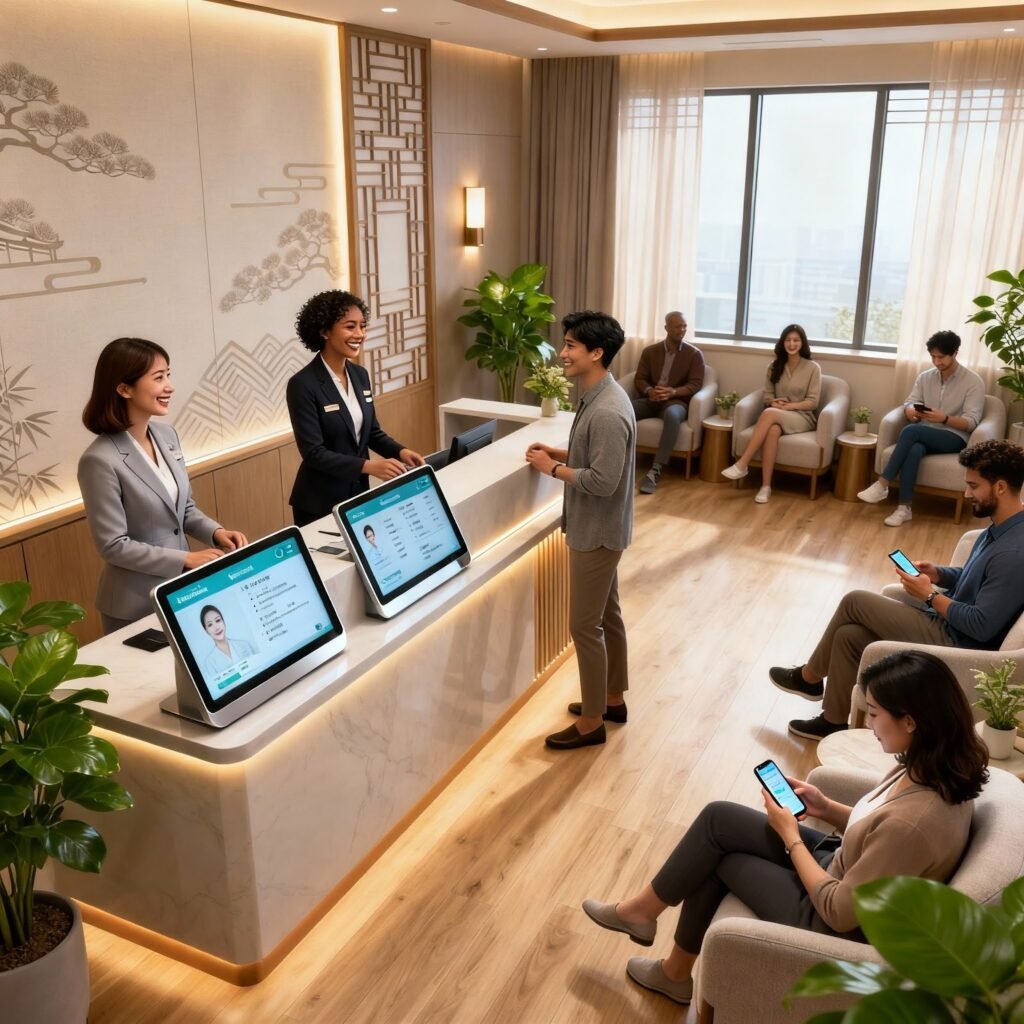
How KAMTOUR Facilitates Cultural and Clinical Exchange
KAMTOUR serves as a bridge between U.S. and Korean healthcare institutions, promoting knowledge exchange that benefits both sides. Through our Certification and Accreditation Program, clinics learn how to adopt Korea’s best practices while maintaining compliance with U.S. medical standards.
Our programs focus on:
- Service Training: Cultural and communication training for front-line staff.
- Clinic Design Consultation: Incorporating comfort, layout, and aesthetics inspired by Korean models.
- Operational Excellence: Efficiency audits and workflow optimization to mirror Korea’s integrated systems.
- Language and Cultural Competency: Guidance on interpreter services and multilingual materials.
- KAMTOUR’s mission is simple — to humanize global healthcare through hospitality, trust, and transparency.
The Business Case for Compassion
For U.S. clinics, adopting a hospitality-first model isn’t just good ethics, it’s smart economics.
- Satisfied patients generate more referrals and loyalty.
- Improved efficiency reduces administrative costs.
- International patients value cultural sensitivity and clarity, increasing conversion rates.
KAMTOUR certification signals to patients that a clinic has met international benchmarks for hospitality, ethics, and clinical excellence — helping U.S. facilities stand out in a competitive market.
Learning from Korea’s National Strength
Korea’s integration of hospitality and healthcare didn’t happen by accident. It’s the product of years of national investment, professional training, and patient feedback. Hospitals treat the patient journey as a
holistic experience that includes emotional comfort, cultural respect, and digital convenience.
By sharing these principles through certified exchange programs, KAMTOUR helps American providers learn how to combine technical skill with emotional intelligence — creating an environment where patients feel cared for, not just treated.
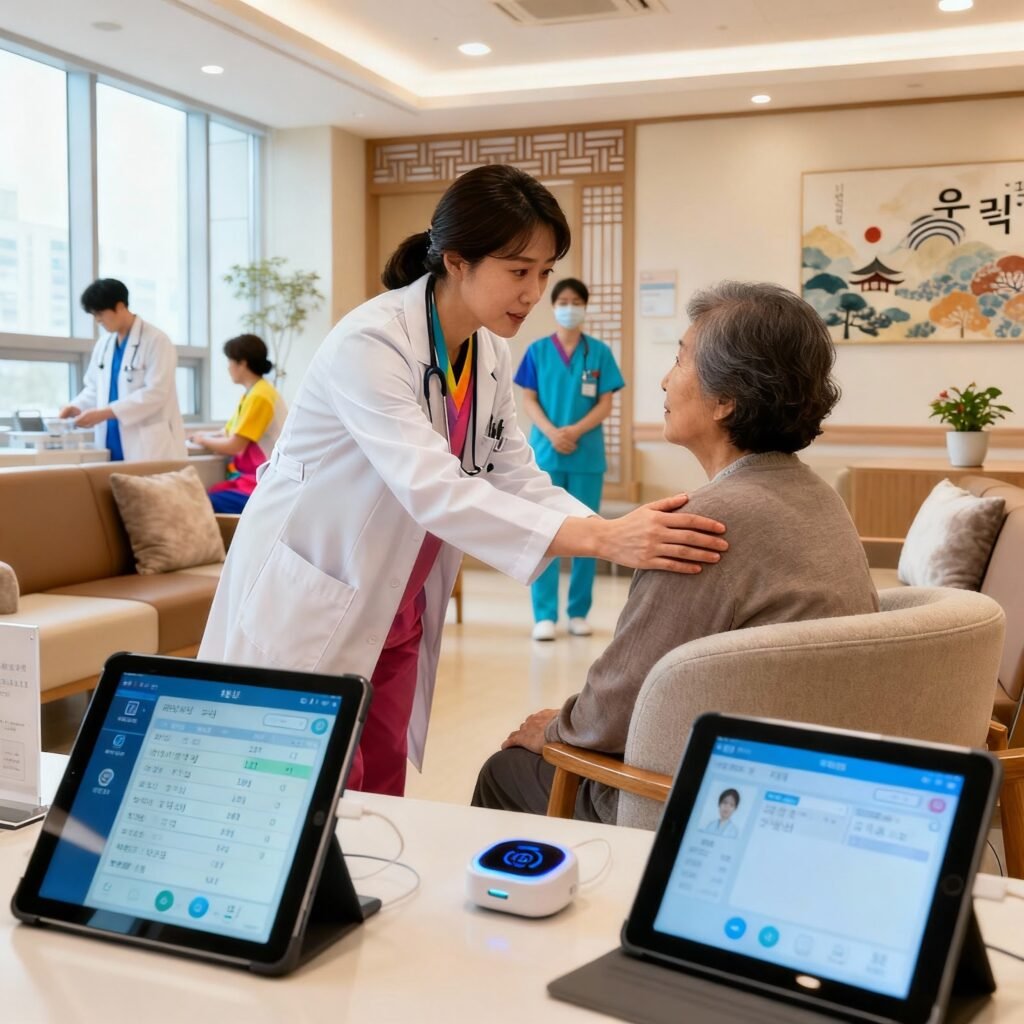
From Clinics to Med-Spas: Expanding the Model
The Korean influence is especially strong in the med-spa and aesthetic sectors, where service quality defines success. U.S. med-spas working under KAMTOUR’s certification standards are adopting hospitality-driven protocols, such as:
- Warm, concierge-style intake experiences.
- Consistent follow-up through digital or bilingual channels.
- Transparent communication about procedures and outcomes.
These practices are helping transform American med-spas into global destinations — blending science, beauty, and humanity.
Conclusion: The Future of Patient Experience Is Personal
As U.S. and Korean clinics continue to collaborate, one message stands clear: patients remember how you made them feel.
By combining the innovation of American medicine with the hospitality of Korean care, KAMTOUR-certified providers are setting a new global standard — one built on empathy, comfort, and cultural respect.
The result is not just satisfied patients, but lifelong trust — the cornerstone of international healthcare. —

