
The Rise of Intelligent Healthcare Collaboration
Artificial intelligence is revolutionizing healthcare — and few partnerships demonstrate this progress better than those between the United States and South Korea.
Together, these two innovation-driven nations are combining American data science and medical technology expertise with Korea’s digital infrastructure and patient-centered efficiency to create the next generation of diagnostics, telemedicine, and predictive healthcare solutions.
KAMTOUR, the Korea–America MedTour Association, proudly serves as a bridge between U.S. and Korean institutions, certifying the partnerships that bring this smart healthcare future to life.
AI and Diagnostics: A Shared Vision
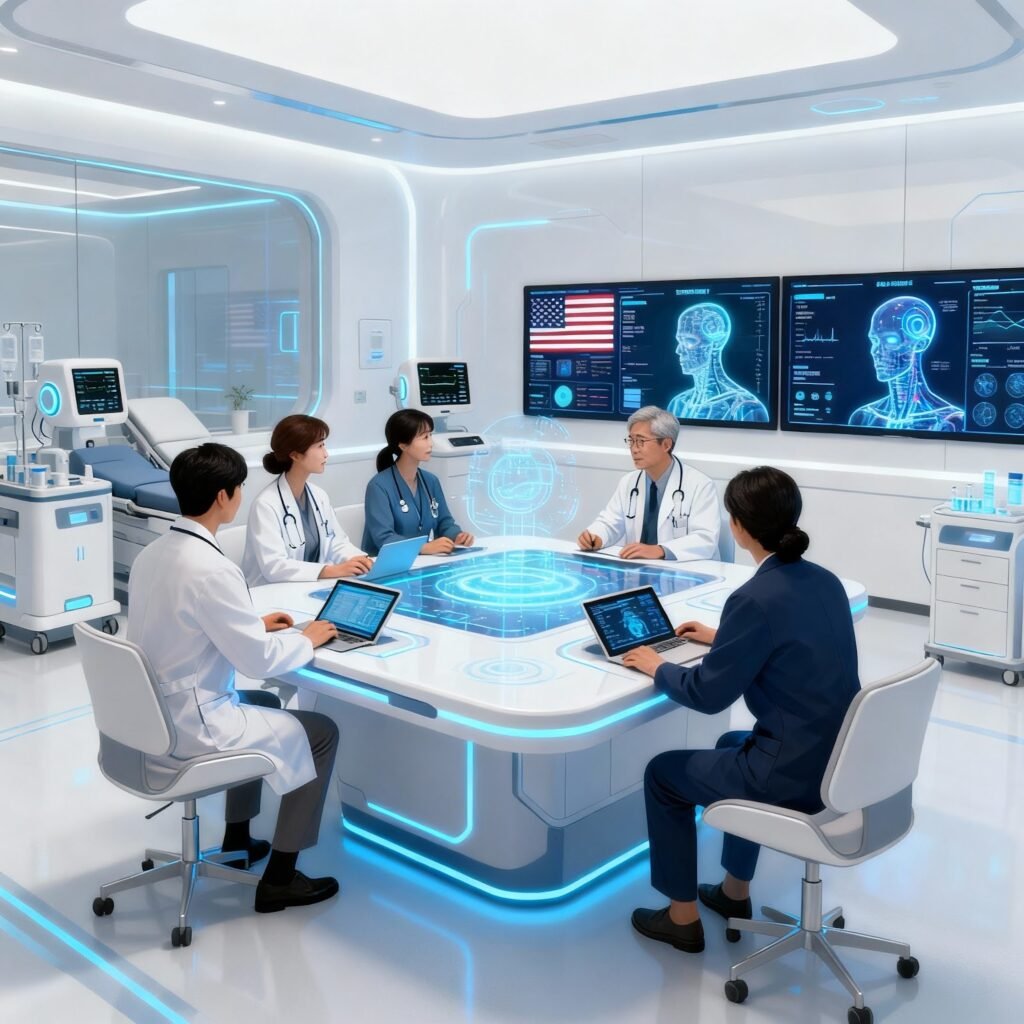
The goal of both countries is clear: faster, safer, and more personalized care. Artificial intelligence and smart diagnostics play a pivotal role by helping clinicians detect disease earlier and tailor treatment more precisely.
- United States: Home to the world’s leading diagnostic innovators like Abbott, Thermo Fisher, and Illumina, focusing on high-accuracy testing and genetic sequencing.
- South Korea: A global leader in digital integration, with nationwide electronic medical records, rapid AI adoption, and a thriving healthtech startup ecosystem.
By merging these strengths, the two nations are building a model for ethical, scalable AI-driven healthcare.
Real-World Partnerships
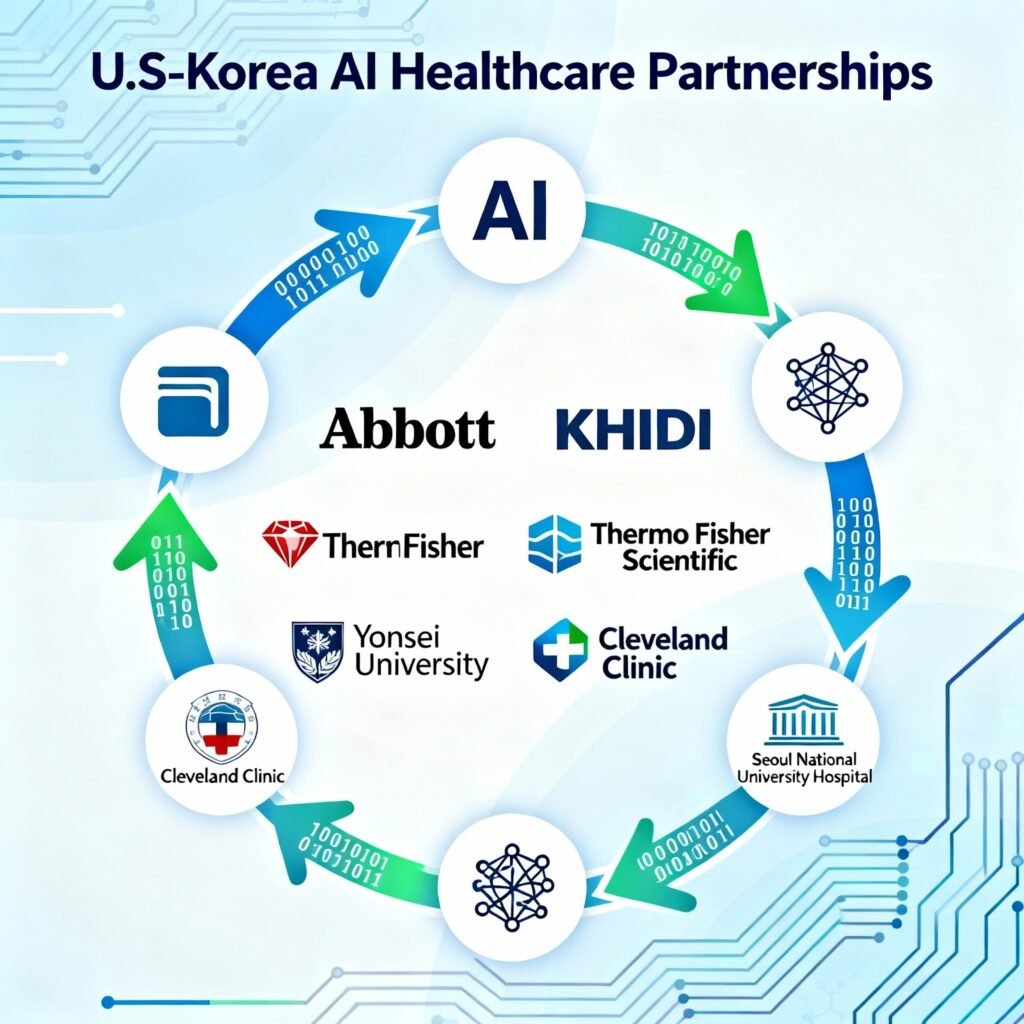
Abbott × KHIDI (Korea Health Industry Development Institute)
Abbott has expanded collaboration with KHIDI to integrate AI-based analysis into diagnostic devices, improving accuracy in detecting infectious and chronic diseases.
Thermo Fisher Scientific × Yonsei University Health System
Thermo Fisher’s AI-enhanced laboratory tools now power Korea’s genomic and proteomic research, helping identify new biomarkers for cancer and rare diseases.
Cleveland Clinic × Seoul National University Hospital (SNUH)
The institutions are co-developing an AI-driven imaging system for early heart disease detection — combining U.S. algorithmic design with Korean data processing and validation.
Each of these initiatives demonstrates that AI isn’t replacing doctors — it’s empowering them with better data and faster insights.
The Role of KAMTOUR in Digital Health Certification
As data moves across borders, trust and compliance become the foundation of collaboration. KAMTOUR certification provides assurance that digital health partnerships adhere to both U.S. (HIPAA) and Korean (PIPA) data privacy regulations, while maintaining ethical standards for AI model training and use.
KAMTOUR-certified digital health projects emphasize:
- Transparency: Clear accountability in data usage and algorithm performance.
- Security: Encrypted, compliant cross-border data exchange.
- Validation: Clinical oversight to ensure AI tools enhance — not replace — human expertise.
- Interoperability: Seamless system integration between American and Korean healthcare platforms.
These standards ensure that innovation proceeds responsibly, protecting both patients and practitioners as technology advances.
AI and the Patient Experience
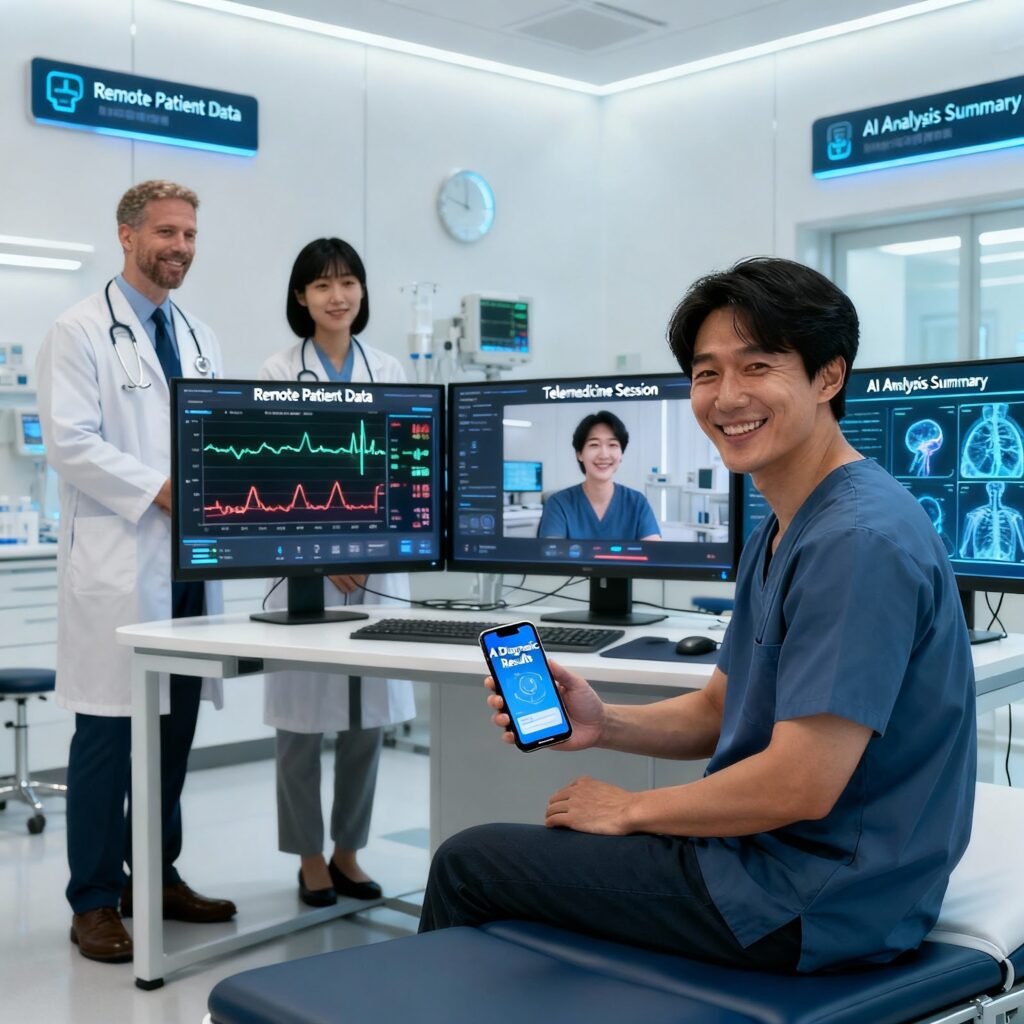
For patients, the benefits of this collaboration are immediate and tangible. AI-powered diagnostics help clinicians detect diseases like cancer, diabetes, and cardiac conditions months or years earlier than conventional methods.
Korean hospitals are integrating American diagnostic devices with local mobile apps that deliver results directly to patients in real time, bridging convenience and precision.
U.S. hospitals, in turn, are learning from Korea’s efficiency in telemedicine, remote monitoring, and predictive analytics, lessons that are now informing the design of American digital health ecosystems.
Building a Smarter Future Together
The partnership extends beyond devices and data. American companies are investing in AI education programs for Korean clinicians and data scientists, while Korean universities are sending fellows to U.S. biotech labs for advanced AI and biomedical research.
KAMTOUR helps coordinate and validate these initiatives through joint certification programs, ensuring all participating organizations adhere to international standards of research integrity, privacy, and patient care.
These exchanges are shaping a new generation of healthcare professionals fluent in both technology and cultural collaboration.
Economic and Global Impacts
This digital transformation is not only improving outcomes — it’s also generating new opportunities for business, employment, and public health leadership.
For the United States, it strengthens export markets for AI software, diagnostic systems, and research services.
For South Korea, it accelerates its transition from a regional healthcare leader to a global partner in digital medicine.
Together, both nations are advancing a sustainable global health economy built on collaboration and innovation.
Looking Ahead: Ethical AI and Global Standards
As artificial intelligence continues to evolve, questions of ethics, transparency, and data ownership will shape the future of healthcare. KAMTOUR’s certification initiative will expand to include an AI Ethics and Data Trust Framework — a voluntary, standards-based system for international AI validation.
This framework will help companies and institutions demonstrate compliance, fairness, and reliability in AI-assisted healthcare. It’s another step toward building not just smart systems, but trusted systems.
Conclusion: A Shared Future of Intelligent Care
The U.S.–Korea alliance in AI and smart diagnostics represents a blueprint for global cooperation, one that blends American innovation with Korean precision and efficiency. Together, they’re creating a world where healthcare is proactive, data-driven, and patient-centered.
KAMTOUR is proud to serve as the certifying bridge, ensuring that this collaboration remains ethical, secure, and globally respected.

